
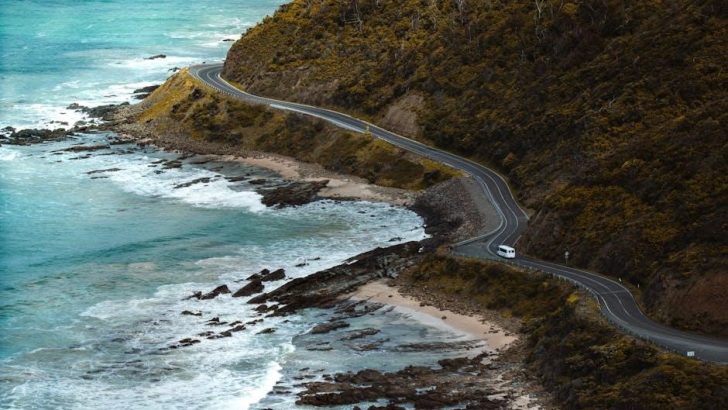
Most American road trip travelers eventually end up thinking about Australia. The East Coast specifically has the same “drive for a week and see everything change” appeal as Route 66 or a Pacific Coast Highway run, but with coral reefs, tropical rainforest, and colonial-era wine country stitched into the same route. If you are the kind of adventurer who plans around diving, hiking, or just the feel of open highway, the trip delivers in a way that justifies the long-haul flight.
U.S. travelers approaching the trip benefit from a clearer view of how the on-the-ground logistics actually work and how the experience differs from a comparable American cross-country drive. The rental setup is the practical question, since the trip is built around the vehicle far more than around any single hub. Picking up a one-way rental at the arrival airport and dropping it at the departure airport on the other end of the route is the standard play. East Coast Car Rentals operates airport counters at every major city along the route, including Sydney, Brisbane, and Cairns, with a fleet that includes SUVs, utes, and electric options. That one-way flexibility is what makes the trip work rather than committing the traveler to a round-trip. The piece that follows breaks down the drive and the prep that separate a smooth U.S.-to-Australia road trip from a stressful one.
Why Is Australia’s East Coast Built for Road Trips?
Geography did most of the work. The Pacific Highway runs continuously up the eastern seaboard from Sydney to Cairns, roughly 1,500 miles of paved, well-signed driving with a town every hour and coastline or rainforest never far from view. The distance is comparable to Los Angeles to Chicago, but the payoff is denser: reef, mountains, beaches, and small towns in rotation rather than long plains stretches.
Weather works in the driver’s favor, too. The East Coast’s subtropical corridor means the road is drivable year-round. Summer (December to February) brings tropical storms farther north, but south of Brisbane stays broadly comfortable. Winter (June to August) is the peak dry season in Queensland, which is when most American adventurers time their visits.
The other underrated factor: Australian highway driving is less aggressive than American interstates. Speed limits cap at 110 km/h (68 mph), overtaking lanes appear regularly, and Aussie drivers are generally more disciplined than the average I-40 experience. The practical result is that 8 hours of driving feels easier than 8 hours on American freeways.
What Stops Should Adventurers Not Skip?
A reasonable 10-day itinerary hits these in order, heading north from Sydney:
- Sydney (Day 1-2): acclimate, dive the harbor if you’re certified, catch the Northern Beaches sunrise.
- Port Stephens / Hunter Valley (Day 3): dolphin tours and Australia’s oldest wine region.
- Coffs Harbour and Byron Bay (Day 4-5): surf, skydive, hike the lighthouse trail at Australia’s easternmost point.
- Gold Coast / Surfers Paradise (Day 6): theme parks if traveling with family, rainforest day hikes at Lamington National Park if not.
- Brisbane and Noosa (Day 7): reset, pick up new supplies, Noosa’s beach culture is worth the half-day.
- Hervey Bay and Fraser Island (Day 8): world’s largest sand island, 4WD beach driving, dingoes in the wild.
- Whitsunday Islands (Day 9): sail, snorkel, or helicopter over Heart Reef.
- Cairns and the Great Barrier Reef (Day 10): the main diving and reef objective for most adventure travelers.
Extending to 14 days lets you add Fraser Island properly, an inland detour to Carnarvon Gorge, or a slower pace through the Sunshine Coast.
How Does the Driving Compare to an American Road Trip?
Three important differences for first-time American visitors:
Driving is on the left side of the road. Rental cars are right-hand drive, which takes most drivers about an hour to stop thinking about. Roundabouts are everywhere, significantly more than even in the northeastern US, and merging rules favor the driver already in the circle.
Distances feel longer on paper. A drive from Sydney to Brisbane is about 11 hours of actual driving, but Australian road food and rest stop culture are different. Highway service stations are farther apart than US Interstates, so fueling up at 3/4 tank is the discipline. The New South Wales Transport driver info has good practical guidance for first-time visitors.
Wildlife is the unexpected factor. Kangaroos cross highways at dawn and dusk, especially in inland stretches north of the Gold Coast. Avoid driving between 4 PM and 8 AM if you can, or drop to 80 km/h in areas where animal-strike signs are posted. The same baseline preparation discipline that travelers apply to a domestic New Mexico road trip safety review carries over directly to the Australian context, with the wildlife-and-distance variables shifted but the underlying preparation question remains the same.
What Gear and Prep Matters for the Trip?
A short list of practical prep that separates a good trip from a bad one:
- International Driving Permit: required technically by most Australian rental companies; get it from AAA in the US for $20 before you leave
- Credit cards with no foreign transaction fees: Australian fuel and accommodation add up fast
- Australian eSIM or international plan: navigation is essential, signal can be patchy inland
- Quality sunscreen: Australian sun is genuinely stronger than the equivalent-latitude US sun; the ozone layer above Australia is measurably thinner
- Snorkel gear: if you’re serious about reef time, bringing your own mask and snorkel beats rentals
- Waterproof phone pouch: reef excursions, rainforest walks, general tropical humidity
- A real pair of hiking shoes: not the “travel shoe” compromise, actual grippy-sole boots for rainforest trails
The U.S. State Department’s Australia country information page keeps a current running list of practical prep items if you want another source to cross-check, and the broader U.S.-traveler perspective on why a single-destination visit is worth the time is the same single-destination thinking that lands many U.S. road-trippers on the Australian East Coast as their next big drive.
What to Remember for Australia Road Trippers
- Sydney to Cairns is the standard 10-14 day route, comparable to an American cross-country trip in distance
- One-way rentals make the trip viable; airport pickup and drop-off at different cities saves backtracking
- Drive on the left, watch for wildlife at dawn and dusk, and plan fuel stops carefully
- Winter (June-August) is the peak adventure season in northern Queensland
- International Driving Permit is a practical requirement, even though some rentals don’t always enforce it
The Bottom Line on Australia’s East Coast Drive
The trip earns its reputation. A week to ten days covers the core itinerary with room for spontaneous detours, and two weeks lets you see it properly. For American road trippers who’ve already done the Pacific Coast Highway or a Route 66 run, this is the next logical trip, with the same rhythm, different scenery, and enough dive-accessible reef at the end to justify the whole thing.
Frequently Asked Questions
Can I rent a car at Sydney Airport and drop it off in Cairns?
Yes, most major rental companies, including East Coast Car Rentals, offer one-way rentals between major East Coast cities. A one-way fee typically applies, but it’s cheaper than the return drive.
Is it safe to sleep in the car on the East Coast route?
Australia’s national parks and roadside rest areas generally allow short-term overnight stops, but sleeping in the car in urban areas is restricted. Most adventure travelers mix hostels, camping, and hotels rather than sleeping in the vehicle.
How much fuel does the trip cost?
A Sydney-to-Cairns run covers roughly 2,400 km (1,500 miles). At Australian fuel prices around AUD $1.90 per liter, budget AUD $400 to $600 for fuel in a standard sedan, more for an SUV.
Do I need a 4WD for the East Coast trip?
No, for the highway itself. Fraser Island specifically requires a 4WD or a guided tour, and rental companies generally restrict standard cars from Fraser. Other major stops are accessible with a normal vehicle.