
Moving to a new place can feel exciting and a little disorienting. You wake up in the morning and don’t even know the street names or the best coffee spot. You have to spend the next few exciting days discovering stuff.
But according to ITIJ, safety concerns remain one of the top worries for travelers, with female harassment hitting a worrisome 60% in 2024.
Clearly, if you’re a woman, that travel excitement comes with a side of “What if?” Does that mean you should stay home? Nope. It just means you need to be smart about moving about in your new location.
With that in mind, here are practical ways to stay safe in a strange place so your routine doesn’t turn into a stress checklist.
Blend In and Act Like You Belong There
This might sound easy enough, but it’s actually one of the most effective travel safety tips out there. When you look lost, you attract attention. Not always the good kind.
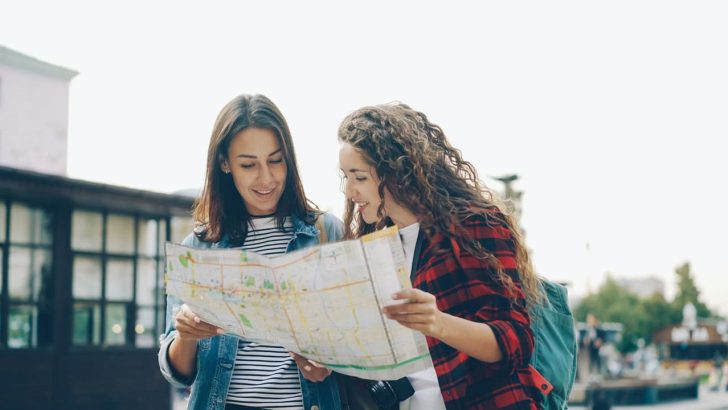
Of course, you need to look up where you’re going most times, but instead of walking around with Google Maps open like a tourist billboard, step into a shop or stand somewhere discreet before checking directions.
A 2024 study in the International Encyclopedia of Business Management noted that tourists are more than 29% more likely to be targeted by criminals.
So what can you do? Don’t look like one:
- Dress like locals. You don’t have to overthink it, just avoid standing out too much
- Walk with purpose, even if you’re unsure
- Learn a few basic phrases if they speak a different language
It’s not about pretending. It’s about reducing unnecessary attention and changing how people perceive you.
Use Verified Transportation and Accommodation
Getting from point A to point B is often the most vulnerable part of moving about in a new or strange location.
So, as tempting as it might be, never, ever get into a random taxi if you can avoid it. Use official apps or pre-booked services where possible.
Even that is not 100% safe. In fact, the New York Post reports that between 2017 and 2022, one sexual assault happened at least every eight minutes on Uber. Although the ride-sharing app said that most of the cases are false, do your bit to protect yourself.
- Always check the vehicle tag and the driver’s face against the app
- Sit at the back, preferably behind the driver
- Use the “Share Trip” feature so a friend can know where you are in real-time
- If anything feels off, cancel the ride and get out
And in the unfortunate case where something does happen, you’re not powerless. An Uber sexual assault lawyer can help you know what your rights are.
You may even be eligible to seek compensation, according to TorHoerman Law.
Where you lay your head is also important. A deal that looks too good on a booking site might come with a serious safety trade-off. Look for reviews that specifically mention security.
Keep Your Valuables Secure and Split Up
Never carry all your important things in one bag. If your purse gets snatched and your passport, cash, and credit cards are all inside, your trip is effectively over.
Instead, keep a “dummy” wallet with a small amount of local currency that you can quickly hand over if you’re ever confronted. Your actual credit cards and passport should be locked in a hotel safe.
You should also:
- Carry only enough cash for the day
- Get a hidden pouch or a money belt for important items
- Keep your bag zipped up and always in front of you in crowded places
- Store a digital scan of your documents on a secure cloud drive
More importantly, be careful not to click on random links about “confirmation numbers” or “booking details” that ask for your info. Incidents of “sms phishing” for travel details are on the rise, according to a report covered by Yahoo News. You don’t want to be a victim.
Stay Aware of Your Surroundings
“Situational awareness” sounds like something from a military handbook, but it just means paying attention. And honestly, it might be the one thing that will keep you safe in a new or unfamiliar place.
So what does this look like in real life?
- Look up and around instead of always in your phone
- Notice exits, crowds, and small changes around you
- Leave quickly if something doesn’t feel right
More than anything, it’s about trusting your gut.
If a street feels off, don’t stand there trying to rationalize it. Just leave. Someone coming on too strong, too fast? Create some distance. Being a ‘nice’ person shouldn’t come at the cost of your safety.
Your instincts aren’t random. In fact, it’s always better to feel a bit awkward later than to be in danger.
Stay Connected and Informed
Going off the grid sounds like fun. But when you’re in a strange place, someone should know where you are.
A report cited by the Luxembourg Times found that over 40% of U.S. adults, especially Gen Z, share their location with at least one person. Not because they’re paranoid. Just because it makes sense. If anything goes wrong, someone will at least know where to start.
In addition to sharing your location with friends and family members when on the move, you should also:
- Check in regularly, even if it’s just a quick “I’m good” message
- Download offline maps in case your internet disappears at the worst time
- Save local emergency numbers before you actually need them
It’s not about living in fear. It’s about giving yourself a backup plan. You may not need it. But when you do, you’ll be glad it’s there.
Final Thoughts
Traveling to a new place will always come with uncertainty. And honestly, that’s the beauty of it. But it does require a different kind of awareness.
Why? Because the world of travel has become more tech-heavy. QR code scams and AI-generated “fake hotel” listings are becoming common and a little harder to spot if you’re not paying attention.
The good news is that you can actually stay safe while you travel, and hopefully, this article has shown you how to do just that.
If you take anything from this guide, let it be this:
Blend in. Stay alert. Protect your valuables. Choose safe options. Keep someone in the loop. And always trust your gut.
It’s usually right.